
Why Is Regular Cleaning Not Enough for a Busy Commercial Kitchen?

Updated: 5 days ago
Cleaning is one of the most important activities in every active commercial kitchen. However, even with regular cleaning, there will always be certain things which will need to be cleaned. Restaurant owners, café owners, bakery owners, office kitchens, and all other types of food-service businesses face daily cooking and food preparation processes, spills, grease, moisture, and people walking in the kitchen. Kitchen staff may wipe counters, sweep the floor, clean spills, and clean the surfaces that are used every day. Still, there will be grease and residues accumulated in places that require more thorough cleaning.

There is no doubt that regular cleaning is valuable and important, because every kitchen needs it to remain clean and well-maintained. However, the problem arises when daily cleaning is supposed to cope with grease, residues, and dirt that accumulate during the months of cooking and food preparation. Understanding the difference between daily cleaning and commercial kitchen cleaning may help you to make your kitchen easier to maintain.
Daily Cleaning Usually Focuses on Immediate Mess
In the course of a hectic shift, the concern is naturally about the mess that requires urgent handling. Food stains are wiped off, counters are cleaned, any visible crumbs are collected, and the floor might be swept or mopped. This makes sure that the kitchen remains operational all through the day; however, it takes time for employees to focus on edges of cupboards, outside of appliances, walls near cooking spaces, surface of hoods, bottom of cupboards, corners, and many other areas where residue accumulates.
This implies that the kitchen appears clean at first glance, yet some surfaces start becoming hard to maintain. Daily cleaning addresses the urgent mess; commercial kitchen cleaning services allow the attention to be paid to the residue which accumulates between such daily cleans.
Grease Does Not Stay Around the Stove
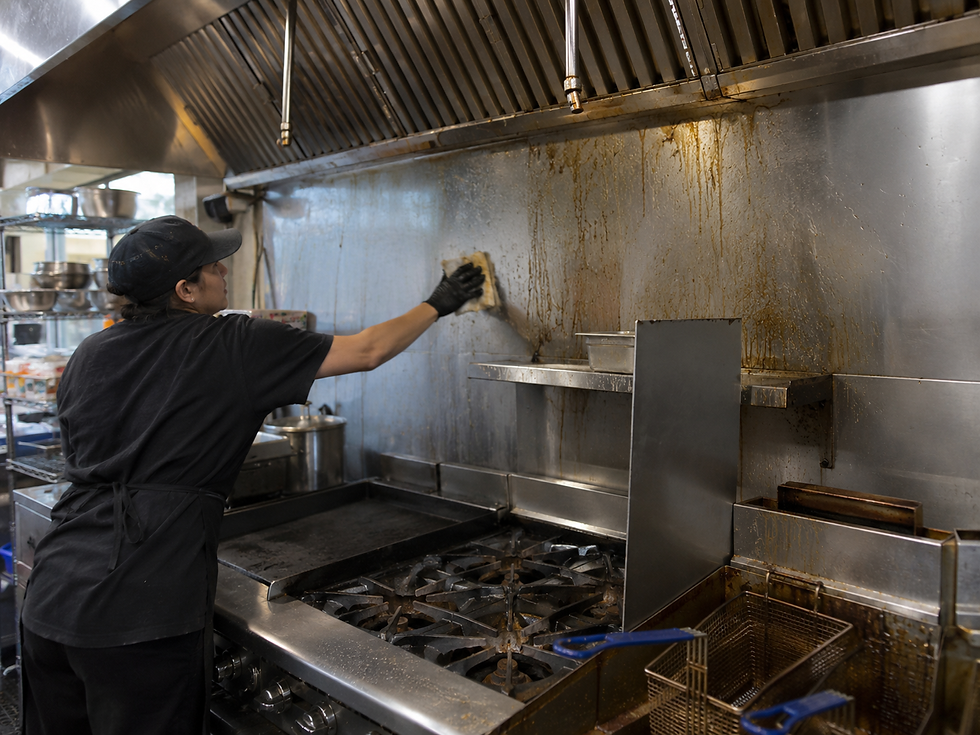
Another problem that is associated with kitchen maintenance is grease accumulation. Fats and grease are not only accumulating on the stove or on the range itself, but also on adjacent surfaces such as counters, cupboards, backsplashes, outside of appliances, easy-to-clean parts of hoods and even on the floors.
Once grease forms on any surface, it can accumulate dust, food particles and other residues which will lead to continuous cleaning of the same areas without success. It usually means that kitchen needs professional cleaning.
Repetition Cleaning Cannot Eliminate Old Grease
Once new residue forms over the old one, routine cleaning can take much more effort. Employees should clean not just relatively clean surface, but the whole area where fats have been accumulating during a longer period of time.
Professional kitchen cleaning can provide proper care for these grease-accumulating surfaces. Accumulated residue can be removed first in order to reduce efforts required for daily cleaning.
Some Kitchen Areas Receive Less Attention Than Others
Not every part of a commercial kitchen receives the same level of daily attention. Counters and preparation areas naturally remain a priority because they are used constantly. Areas such as cupboard fronts, handles, appliance sides, sink edges, lower surfaces, accessible hood exteriors, and sections around cooking equipment can receive less detailed attention during busy working hours.
These overlooked areas do not necessarily become dirty overnight. Instead, small amounts of grease, dust, food residue, and marks gradually accumulate until they become noticeable.
A detailed kitchen deep cleaning gives businesses an opportunity to work through these areas systematically rather than waiting until the buildup becomes difficult to ignore.
Kitchen Floors Can Become Harder to Maintain
Commercial kitchen floors deal with frequent foot traffic, spills, crumbs, grease, and tracked-in dirt throughout the working day. Routine sweeping and mopping are important, but a floor can gradually become dull or difficult to clean when oily residue begins building up.
Repeatedly mopping a problem area may improve the immediate appearance without fully addressing older residue. More detailed floor cleaning can focus on the areas that receive the most traffic and exposure to spills and grease.
When floors are cleaned alongside counters, cupboards, cooking areas, sinks, and other surfaces, the whole kitchen can feel more consistently maintained rather than having a few clean areas surrounded by older buildup.
Deep Cleaning Complements Regular Commercial Kitchen Maintenance
It is important to remember that detailed cleaning is not a substitute for regular cleaning. Detailed cleaning should complement regular cleaning. While the former ensures that the immediate mess caused by the functioning of the kitchen is taken care of, the latter takes care of the accumulated dirt that becomes difficult to clean.

Based on the kitchen and the cleaning contract entered into, detailed cleaning services would include cleaning of the exterior surfaces of cabinets and cupboards, countertops, external surfaces of stoves and ovens, sinks and faucets, external surfaces of the appliances, greasy surfaces, exterior surfaces of hoods and floors.
This way of thinking about detailed cleaning makes commercial kitchen maintenance easier for a restaurant/food services business that is very busy.
Professional Cleaning Can Help Reduce Repetitive Work
If employees are taking up more and more time trying to clean the same cupboard doors, greasy counters, cooking zones, or floors, then this can mean that normal cleaning no longer takes care of the build-up.
Professional kitchen cleaning of restaurants can help with this process as well by focusing on those surfaces which are hard to clean while working. When these surfaces have been cleaned in more detail, the employees will be able to revert back to normal maintenance without needing to do all of the cleaning at once.
This can be very helpful especially for restaurants, cafés, bakeries, catering kitchens, office kitchens, and any other place where the employees have tough operational tasks to perform.
When Should a Business Consider Professional Kitchen Cleaning?
A business does not have to wait until the entire kitchen looks heavily soiled. Increasingly sticky surfaces, grease returning quickly after wiping, cupboards becoming dull around handles, visible residue around cooking areas, or floors becoming harder to maintain can all suggest that more detailed cleaning would be useful.
The objective is to address buildup before it becomes a constant maintenance problem. Combining regular staff cleaning with periodic professional attention provides a more practical approach for busy kitchens than expecting everyday cleaning to handle every surface and every type of residue.
Give Your Business Kitchen the Detailed Attention It Needs
Regular cleaning remains important, but a high-use commercial kitchen can develop grease and residue in areas that daily wiping and mopping do not fully address. Professional cleaning provides the opportunity to focus on those problem areas and create a cleaner, more manageable environment for ongoing maintenance.
Railway City Carpet Cleaning provides professional kitchen cleaning services in London, Ontario, as well as St. Thomas, Tillsonburg, Ingersoll, Aylmer, and surrounding areas. If your restaurant, café, bakery, workplace, or other business kitchen is becoming harder to maintain despite regular cleaning, a more detailed professional service can help address the areas that need extra attention.

Comments